

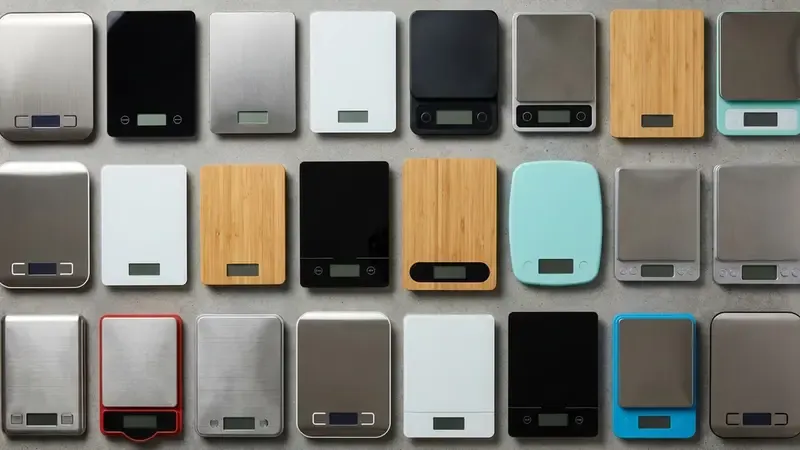
Best Digital Food Scales For Meal Prep
Affiliate disclosure: As an Amazon Associate, Meal Prep Tools earns from qualifying purchases. Product links may earn a commission at no extra cost to you. Read our disclosure.
A food scale is useful when you want repeatable portions or a recipe that tastes the same next week. It can also reduce washing up: place a bowl on the platform, tare it and add ingredients by weight. You do not need nutrition tracking or a phone connection for that workflow. A readable display and enough capacity for your bowl often matter more than a long feature list.
This guide uses manufacturer specifications, published product details and widely reported owner feedback, rather than hands-on lab testing. It compares five identifiable options for different cooking routines. Display resolution is described separately from accuracy: a screen that shows tenths of a gram does not prove that every reading is accurate to a tenth of a gram. Check the exact current listing and manual before buying, especially when a product name includes a precision claim.
Selection Criteria: Capacity, Readability and Repeatable Use
Capacity includes everything on the platform, even after you tare the container. A heavy mixing bowl can use much of a small scale’s load allowance before any food is added. For batch cooking, weigh your empty pot or bowl first and allow enough room for the full recipe. Tare removes the displayed container weight; it does not increase the scale’s physical limit.
Resolution is the smallest displayed increment. Whole grams are generally practical for cooked rice, vegetables and ordinary meal portions. Very small quantities such as yeast or a concentrated seasoning need more care: check the minimum load, resolution range and intended use. Do not use a kitchen scale to measure medicine. A nutrition feature adds another layer of uncertainty because the selected food entry must match what you actually weigh.
Common owner frustrations are practical: a bowl covering the numbers, touch controls responding to spills, an auto-off timer interrupting a recipe and a scale that rocks on a soft surface. Read feedback for the exact model, then check whether your largest container leaves the controls visible. A broad platform helps only if its feet sit flat and the load is centered.
- Check total load capacity with your heaviest container, not just the food weight.
- Look for a clear grams mode, an accessible tare button and a display you can see under a bowl.
- Decide whether disposable batteries or a rechargeable design fits your storage and use.
- Check cleaning instructions; a wipeable platform does not make the electronics waterproof.
Comparison at a Glance
| Product | Best fit | Key detail | Main compromise |
|---|---|---|---|
| Nicewell 22lb Digital Food Scale | Batch cooks weighing heavier bowls and larger recipes | Published listing: 22-pound capacity and 1-gram increments | Not a specialist small-dose scale |
| Etekcity Food Scale with Bowl | Cooks who regularly weigh loose ingredients into a removable bowl | EK5250 manufacturer details: 11-pound capacity; tare; included bowl | The bowl takes storage space and is not essential for every task |
| Greater Goods Food Scale with Nutrition Calculator | People who prefer an on-device food database | Nutrition estimates based on a selected food code and measured weight | Food-code selection adds work and possible mismatches |
| KitchenAid Dual Platform Digital Kitchen Scale | Cooks who alternate between bulk ingredients and small additions | Separate large and small weighing platforms | Each platform has its own load limit and usable area |
| BOMATA High Precision Rechargeable Kitchen Scale | Frequent users who prefer charging to changing batteries | Existing listing advertises 0.1-gram display increments and USB charging | Resolution and useful minimum load still need checking |
Nicewell 22lb Digital Food Scale
Who it is for: Batch cooks weighing heavier bowls and larger recipes.
The Nicewell listing in the original guide emphasizes higher capacity and a flat platform. That is a useful combination when you divide a large cooked batch or add several ingredients to one mixing bowl. The higher load allowance is its reason to be on this shortlist; it is not evidence of better measurement accuracy. Check that the bowl sits securely and does not hide the display or press on the controls.
Treat its gram mode as a general cooking tool. For a tiny spice quantity, the minimum detectable load and sensor behavior matter more than the maximum capacity. The current ASIN should be checked for the exact finish, battery requirements and dimensions because marketplace variations can differ. Avoid setting a hot pan directly on the platform, and wipe spills away before liquid reaches the edges or battery compartment.
Pros: higher published capacity for large batches; flat surface for different bowls; simple tare-based workflow.
Cons: whole-gram increments for small quantities; large bowls can obscure controls; battery and variant details need checking.
Check current price on Amazon for Nicewell 22lb Digital Food Scale
Etekcity Food Scale with Bowl
Who it is for: Cooks who regularly weigh loose ingredients into a removable bowl.
A supplied bowl is convenient for oats, flour or chopped vegetables that would otherwise spread across a flat platform. Etekcity’s EK5250 page lists an 11-pound capacity, two AAA batteries and a two-minute auto-off. That timer is worth considering if you stop to chop another ingredient between additions. You can still tare a different container when the included bowl is not the right shape.
Some listing titles advertise 0.1-gram precision, but the manufacturer product page does not establish that specification for every load. Confirm the exact model on the seller’s page and consult its manual if fractional grams are important to you. For ordinary portioning, bowl stability, visible numbers and easy cleaning are more useful deciding factors than an unverified precision headline. Do not choose it for tiny quantities without checking that documentation.
Pros: included removable bowl; manufacturer documents capacity and auto-off; standard battery supply.
Cons: timer may interrupt slow ingredient additions; bowl needs cupboard space; fractional-gram claims require model verification.
Product details: Etekcity EK5250 specifications.
Check current price on Amazon for Etekcity Food Scale with Bowl
Greater Goods Food Scale with Nutrition Calculator
Who it is for: People who prefer an on-device food database.
This scale combines weighing with a nutrition database. Its useful distinction is that you can select a food entry and see an estimate without moving every number into another device. That may suit a repeat menu built around the same ingredients. The manufacturer’s nutrition-scale materials explain the code-based workflow; confirm the matching model and included reference material on the current listing.
The scale senses weight, not protein, calories or the composition of a mixed dish. A database entry for raw chicken will not describe the same weight of cooked chicken accurately, and a generic packaged-food entry may differ from your label. For homemade meals, recording the recipe ingredients and dividing the finished batch can be clearer than finding one approximate food code. Choose this model for a workflow preference rather than a promise of precise dietary analysis.
Pros: on-device nutrition reference; useful for repeated ingredient entries; combines weighing and estimates.
Cons: database does not analyze food; food codes require attention; mixed recipes still need calculation.
Product details: Greater Goods nutrition scale product information.
Check current price on Amazon for Greater Goods Food Scale with Nutrition Calculator
KitchenAid Dual Platform Digital Kitchen Scale
Who it is for: Cooks who alternate between bulk ingredients and small additions.
The dual-platform design addresses two different jobs: weighing a mixing bowl and weighing a small ingredient separately. That can make sense if bread, seasoning blends and meal portions share your prep session. Read the exact product manual for each platform’s capacity and increment. A small platform is not simply an extension of the large one, and a bowl must not bridge the two weighing surfaces.
KitchenAid’s care guidance recommends a flat surface, centered loads and storage without weight pressing on the sensors. Those habits matter regardless of brand. The tradeoff here is a more complicated object to place, clean and store than a simple single-platform scale. Choose it when the smaller platform replaces a task you already do; otherwise, a straightforward gram scale may be easier to use and keep ready.
Pros: two distinct weighing surfaces; bulk and small-ingredient workflow in one device; published manufacturer care guidance.
Cons: platform limits require attention; more counter area than a compact scale; small platform may not suit every vessel.
Product details: KitchenAid scale use and care.
Check current price on Amazon for KitchenAid Dual Platform Digital Kitchen Scale
BOMATA High Precision Rechargeable Kitchen Scale
Who it is for: Frequent users who prefer charging to changing batteries.
The BOMATA model retained from the original guide advertises rechargeable operation and a fine display increment. Charging can be convenient for a scale used almost daily, especially when you have an accessible cable location. It also introduces another thing to plan: whether the scale can operate while charging, how the battery is maintained and where the cable will stay away from spills. Verify those details in the current manual.
Do not interpret a decimal place as a laboratory accuracy guarantee. Check minimum load and calibration instructions before choosing it for small baking ingredients. Keep the scale away from a running mixer, drafts and uneven surfaces, which can interfere with a stable reading. If all you need is to divide cooked food into containers, rechargeable convenience is the stronger reason to choose this model than the extra digit.
Pros: USB rechargeable design; fine displayed increments advertised; suits frequent use with a charging routine.
Cons: charging and battery upkeep; minimum load matters for tiny additions; published resolution is not verified accuracy.
Check current price on Amazon for BOMATA High Precision Rechargeable Kitchen Scale
How to Choose Without Paying for Unused Features
Set an empty container on your counter and imagine the whole process: turn on, choose grams, tare, add food, read the screen and remove the bowl. If the controls would be hidden or the platform is too small, cross that model off. Next, decide whether you genuinely need fractional grams or nutrition codes. Most meal portioning does not require either.
Check current price for the model with the power supply and accessories you need. Read return terms and look for a downloadable manual. When reviews disagree about accuracy, see whether they describe the same model, a level surface and a suitable load. A damaged scale or a device that will not return to zero should be addressed with the seller rather than compensated for by guessing an offset.
A Simple Batch-Portioning Method
Weigh an empty storage-safe bowl and record its weight before adding the finished food, or tare it while empty. Weigh the cooked batch, then divide its food weight by the number of portions you want. For a mixed meal with uneven ingredients, portion the protein and grain separately so one container does not receive mostly sauce. Stir a reasonably uniform dish before dividing it.
For nutrition logging, use ingredient data that matches the state you weighed: raw entries for raw ingredients and cooked entries for cooked foods. Water absorbed by rice or lost by meat changes weight without making raw and cooked database entries interchangeable. Keep estimates practical, and remember that substitutions and uneven portions change the result. Wash containers normally, but wipe the scale according to its manual and dry it before storing.
Frequently Asked Questions
Does tare increase the maximum capacity?
No. The bowl and food still count toward the physical load limit. Tare only resets the displayed number. If your bowl is heavy, subtract its weight from the stated capacity when planning how much food the scale can hold.
Are milliliters on a food scale the same as measured volume?
The scale converts mass using an assumed density, often for water or milk. That conversion does not work equally for oil, honey or every sauce. Use grams when the recipe gives a weight and a measuring jug when it requires a true volume.
Will a nutrition scale calculate my homemade meal exactly?
No. It combines measured weight with a selected database entry. A homemade recipe needs ingredient totals and a portioning method; even then, the result is an estimate. Package labels and actual ingredient amounts are more useful than an approximate generic dish entry.
Plan Your Next Prep Session
- Plan portions with the macro guide
- Estimate your protein target
- Compare meal-prep storage containers
- Browse more gear comparisons
Read how Meal Prep Tools chooses products and handles corrections. Updated .

